complete guide on how i grew from 100 to 20,000 downloads in three months with ugc creators
these are 10 things you should know before you try tech ugc.
first what is tech (or canvas) ugc and how it differs from regular ugc. people call it canvas because creators launch fresh theme accounts from zero followers — blank canvases — instead of posting on their personal pages.
classic ugc is about creators making videos for brand accounts and sometimes they post it in their feeds, usually it is 1-2 videos for $100-500 each depending on usage rights complexity of production and editing.
tech ugc is completely different — it's a numbers game: you sign a creator on a retainer — 30-60 videos for 30 days, posting daily, proven formats, easy to produce (think of face reaction + app demo), 3-4 platforms (reels, tt, shorts, fb reels) so the team of 4 would produce around 600-1200 videos (150-300 unique) in a month. chances of going viral with those numbers increasing significantly.
| classic ugc | tech ugc | |
|---|---|---|
| posted on | brand account, sometimes creator feed | fresh theme accounts from zero followers |
| volume | 1-2 videos | 30-60 videos in 30 days, posting daily |
| price | $100-500 per video | retainer + cpm bonus |
| platforms | 1 | 3-4 (reels, tt, shorts, fb reels) |
| team of 4 makes | — | 600-1200 posts a month (150-300 unique) |
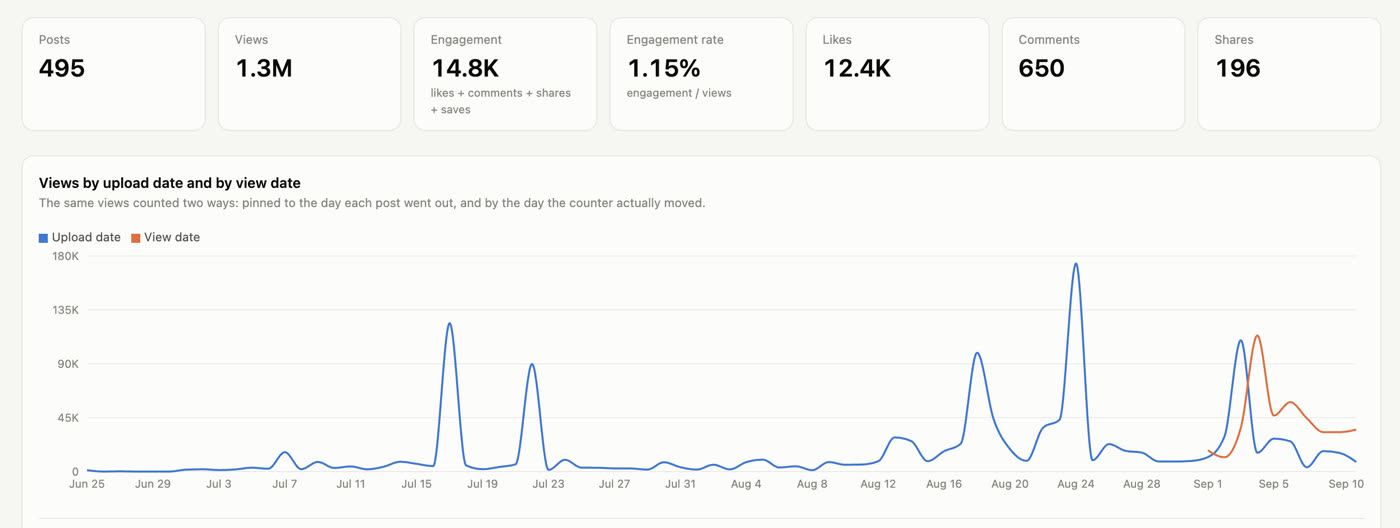
data from launchpoint across 18k ugc posts shows that only 0.3% ever cross 100k views and the top 1% drive 88% of all impressions, which proves why volume is everything.
i talk mostly about app marketing but saas and other digital products have pretty much the same things.
1. you have to have a visual feature in your app with some novelty in it
my app was just another ai photo and video generation: some prebuilt prompts for image generations. but right before i started working with ugc i shipped a feature that basically makes your photoshoot based on reference image (ex any pinterest photo).
so at the moment i passed the app to creators i had plenty of functions but creator noticed this new one — pinterest to photoshoot and decided to cover it instead of generic functions. it was kind of magic: any photo to your photoshoot 4 to 8 photos plenty to choose from.
2. you should give creative freedom to creators but still feed them with proven formats
if you plan to start working with creators you need to have a creative brief — they should know what to do. basically it's a document with some research on which formats working well in your niche.
hard thing to learn: formats you are choosing should not be older then 2 months, better 2-3 weeks because old formats even proven ones better chance they already saturated and won't perform.
there is no secret in going viral because nobody knows how to do this consistently. it's a combination of your app virality, quality of content (it's about how you choose creators to work), timing, music, editing and many other things.
3. usually it takes time to find a format but i was lucky (and you can be too)
i was very lucky and the very second post from my first creator got 300k views on tt and 100k views on insta on the first day. eventually tik tok got 1.3m views for 10-12 weeks and it's still gaining some views.
you might be lucky too finding working format from the very beginning but be prepared to spend some time like 1-2 months until you have real traction.
4. you should have app demo in the video — or it is just views and it won't convert
we are here to find out how to get more downloads for your app not just to find out how to be popular on socials that is why we need to think about conversions.
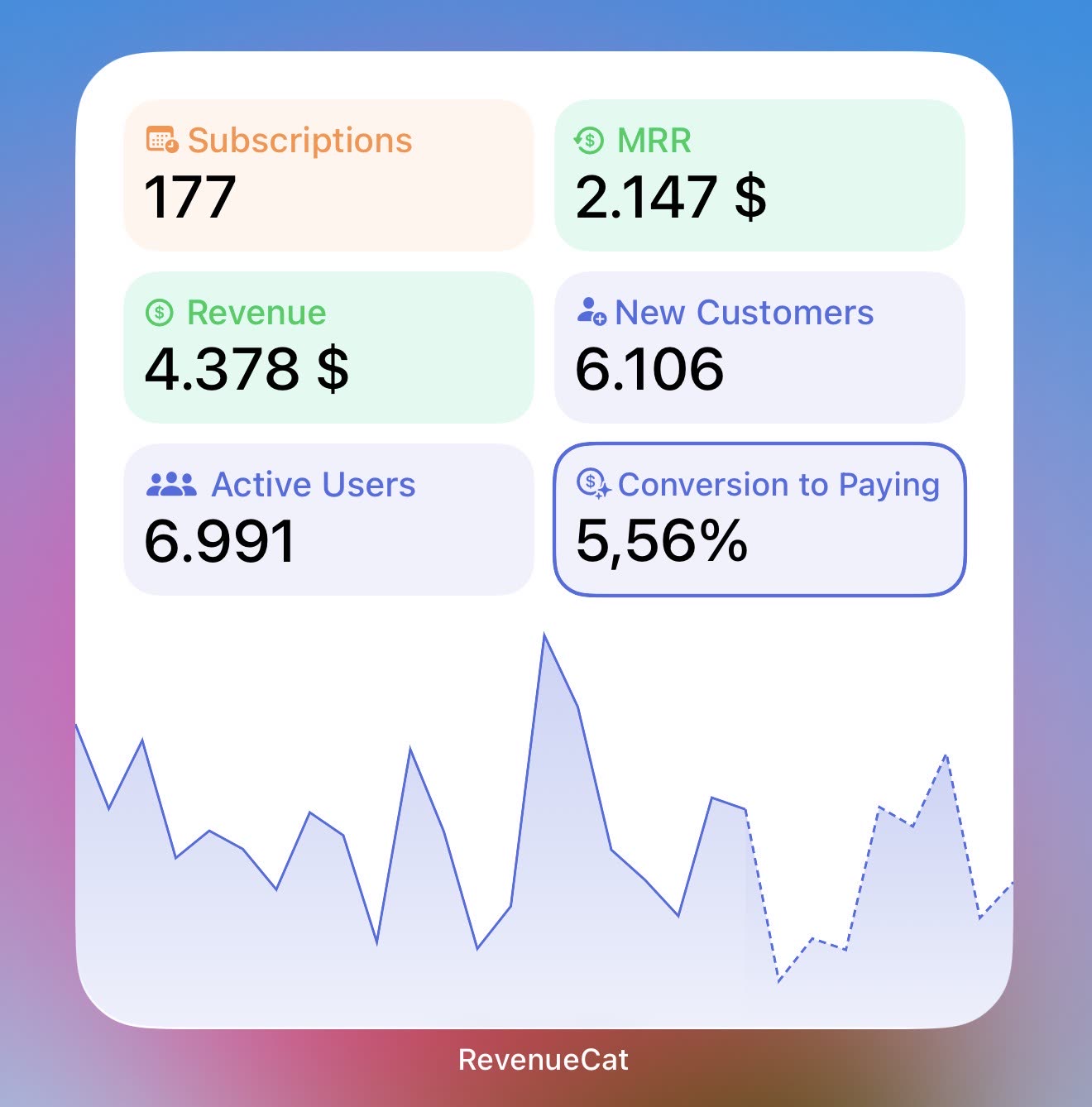
the best converting posts very obvious app demo in the video better with icon name and basic flow demonstrating. it worked for me i have different posts went viral — with app demo and without it and no app demo and branding doesn't bring downloads.
5. you need to have unique app name easy to search in the app store
my app name is aya photo, if you put just aya on app store search it would show you like 100s of apps only aya photo works the best. it's two words and it's much more complex then some of competitor names like wayshot or flibbo — it's just one flibbo and one wayshot. easier to find better conversions. it's just that easy.
please invest in naming if you plan to make ugc — easy to reproduce brand name with one word is a key to find your app without struggle.
6. it's a financial investment, be prepared to spend $3-5k minimum
as a mentioned it takes time to find proven format that you can ride for several more months just repeating it. sometimes it's 1-2 months of posting with several creators. i ve seen founders made it from their first post or some of them spent 8 months of almost everyday posting until they found one. i know that i can't be so consistent that is why i am hiring ugc creators.
i would say working with 2-3 good creators for 1-2 months would give you something viral if you do everything right. it's not guaranteed though its just an average.
how much money you ll spend before you see your return? i don't know, nobody knows but lets calculate:
this is minimum if you are not outsourcing finding them. plus probably sideshift.app which is giving you pretty much anything you need to find creators — from posting your offer to paying and analytics for your ugc campaign. their brand plan is around $499 a month, which is where that extra cost comes from. so the total minimum would be around $4000 a month.
7. it's a time investment
whether you are using sideshift or sourcing you need to research write to creators — you need to check their portfolio, book calls (at least 15 min video call — you are basically checking that the person can show up and understands what commitment is, also vibe check), send briefs, contracts, payments, instruct and guide on content creation after you launch check analytics if they show up on every platform.
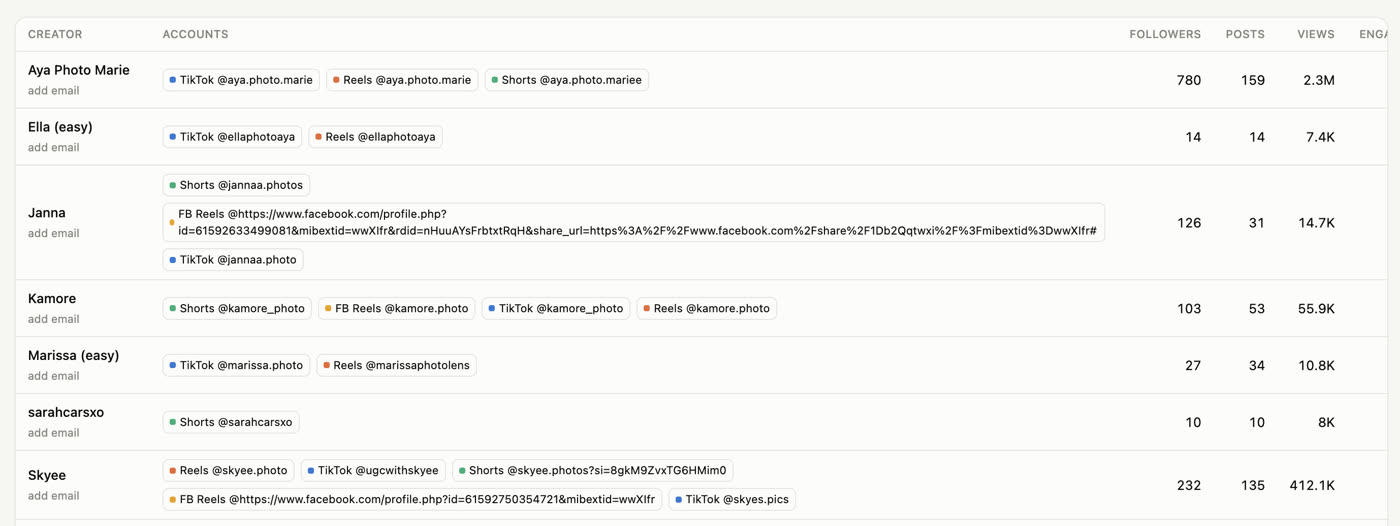
for me cold outreach in tik tok worked better then sideshift, my most successful creators came from emails:
trial is basically the same retainer but it's about checking style and showing up before you start monthly retainer.
8. you should be careful with payment structure
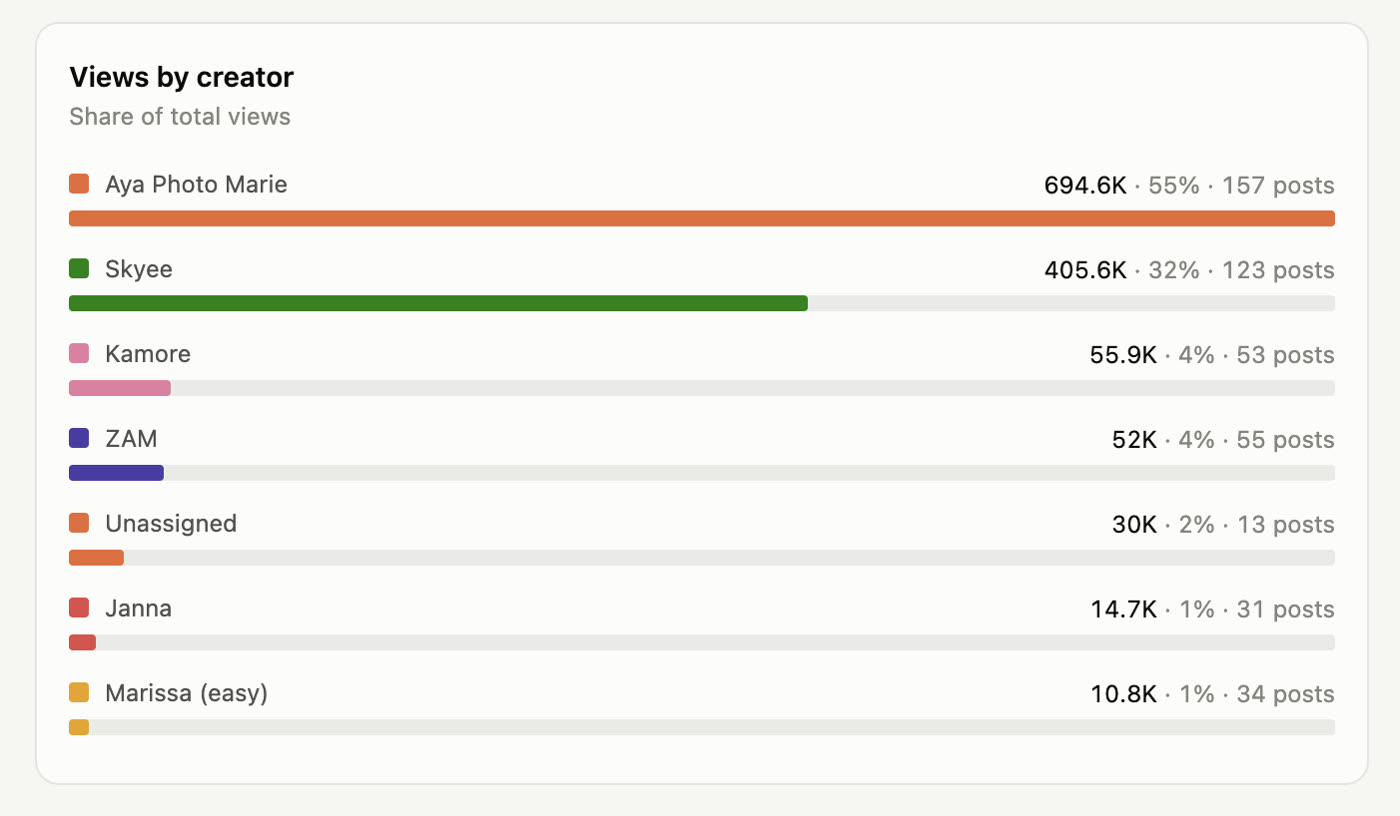
payment structure usually looks like this: $25-30 per video posted on 3-4 platforms, so it's $750-900 monthly + $0,5-1 cpm (cost per mille but actually cost per 1,000 views) it's a bonus. sometimes there are bonuses that is issued per group creators like 1m views bonus paid one time per group. all of this can vary but i am giving you most often used conditions.
| per video, posted on 3-4 platforms | $25-30 |
| monthly, per creator | $750-900 |
| cpm bonus (per 1,000 views) | $0,5-1 |
| cpm cap per post (mine) | $100 = 200,000 views |
| group bonus | 1m views, paid one time per group |
so things you need to be aware before you committing:
1) cpm cap per post. me personally made this cap $100 bonus is a maximum per post it's worth 200,000 views post so after it gain 200,000 bonus stop increasing. it's a defense mechanism not to go broke after hitting 5m views post with no conversions.
2) last couple months i am seeing problem with posts going viral for countries that are not converting well like india, pakistan and others. no hate but conversion rate 30x smaller then in tier-1 countries. so another thing to add — view bonus is paid only for tier-1, tier-2 countries views not all of them. define that list clearly in your contract (usually us, uk, ca, au, and western europe) and require creators to send analytics screenshots showing audience geography before payout.
9. you need to be constantly researching a new formats
even good fresh format dies in 2-3 months, but during 2-3 months views are compounding between posts with good view count and it's good because even after two months of viral post you still have stable traffic from downloads.
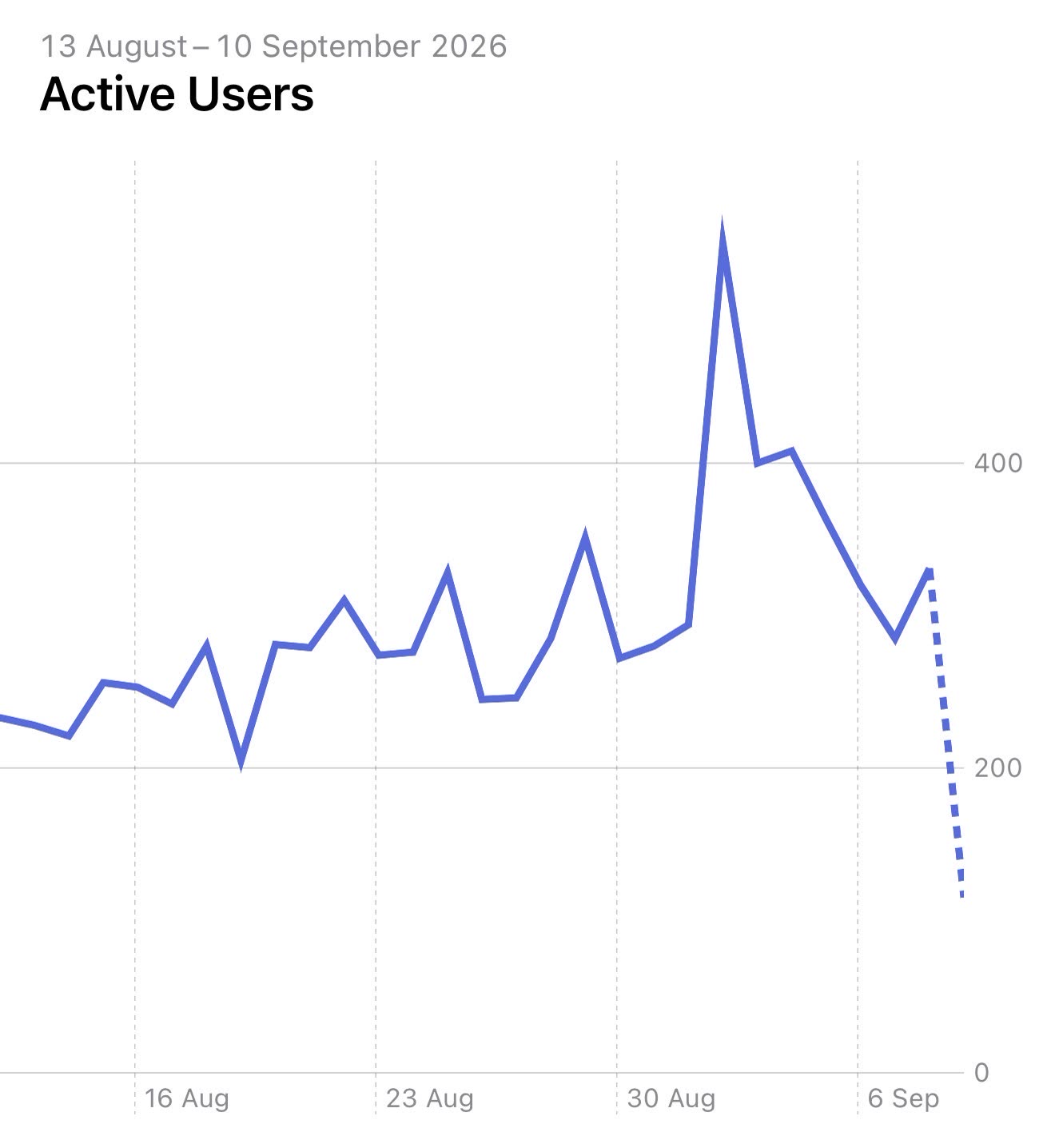
as for me — i didn't find completely new format but variations on the first viral post still work after 3 months. it's not even close on view count but still gaining some traction.
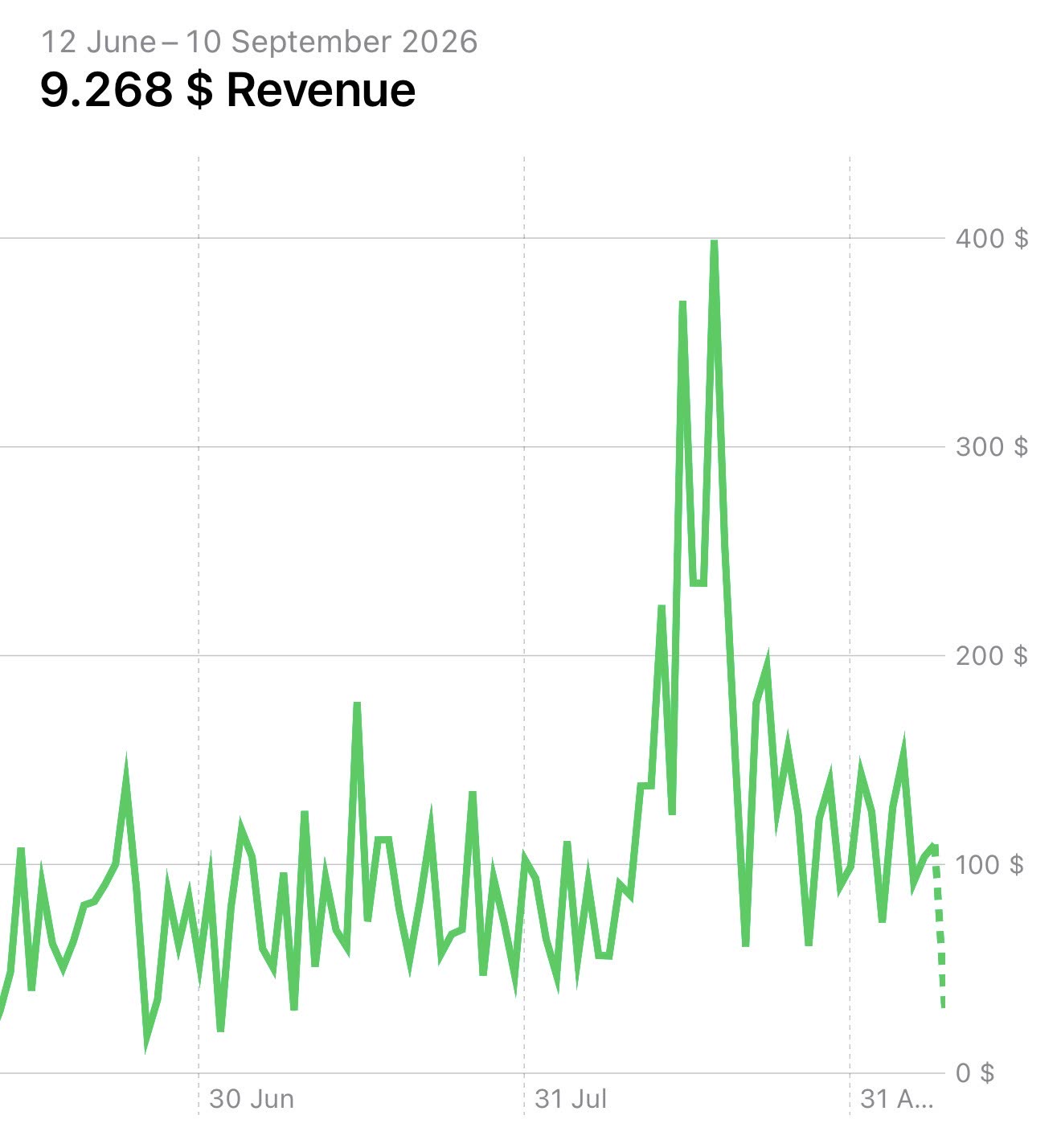
10. you should move to paid when you feel that you are not growing any more
ugc is great tool to find your first customers, look for you app from different angles (creators does it), find what does traction on socials — it signals the part of the app that need to be most important.
having so many videos from creators — it's like having good tested creatives for your paid (meta, tik-tok). probably by the time you decide to go paid you already know which countries convert good and you can target those.